

Description
A corrosion probe tracks metal loss inside a pipeline or vessel so you can act before a wall fails. EMT builds these probes for oil, gas, and process lines that need continuous corrosion data without a shutdown. The reading tells you the corrosion rate, and that rate drives your inhibitor dosing and inspection schedule.
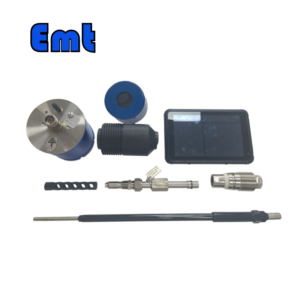
This page covers EMT’s full corrosion probe range: electrical resistance (ER) probes, linear polarization resistance (LPR) probes, hydraulic insertion probes, and corrosion coupon probes. Each type fits a different duty, and most share the same high-pressure access fittings.
How EMT corrosion probes work
The ER probe watches a thin sensing element made from the same metal as your line. As corrosion thins that element, its electrical resistance rises. The change is compared against a sealed reference element, so you get a cumulative metal-loss reading you can trust.
The LPR probe takes a different path. It applies a small voltage across electrodes and reads the current to calculate an instantaneous corrosion rate. That makes it useful where you want a real-time number in a conductive fluid such as water or acid.
The EMT corrosion probe range
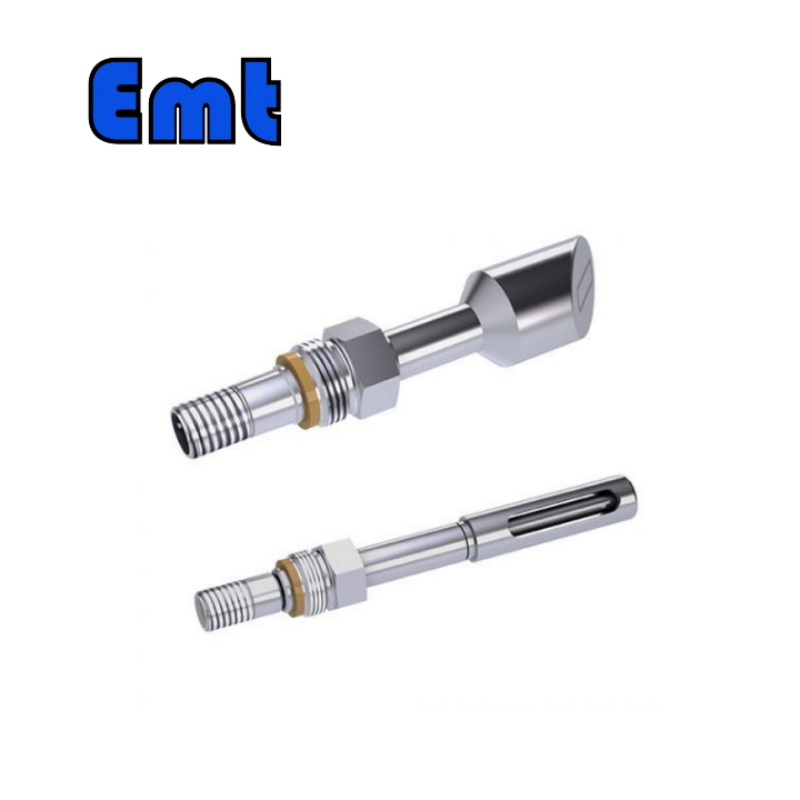
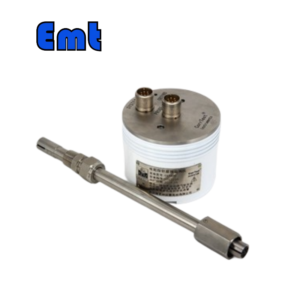
The ECP series resistance probe monitors corrosion by detecting resistance change in the sensing element. It handles pressures up to 26 MPa and comes in columnar (cylindrical) and sheet (flat) shapes. EMT-EP100 is a fixed-length, retrievable ER probe built for high-pressure access systems, with a fully welded sensor structure.
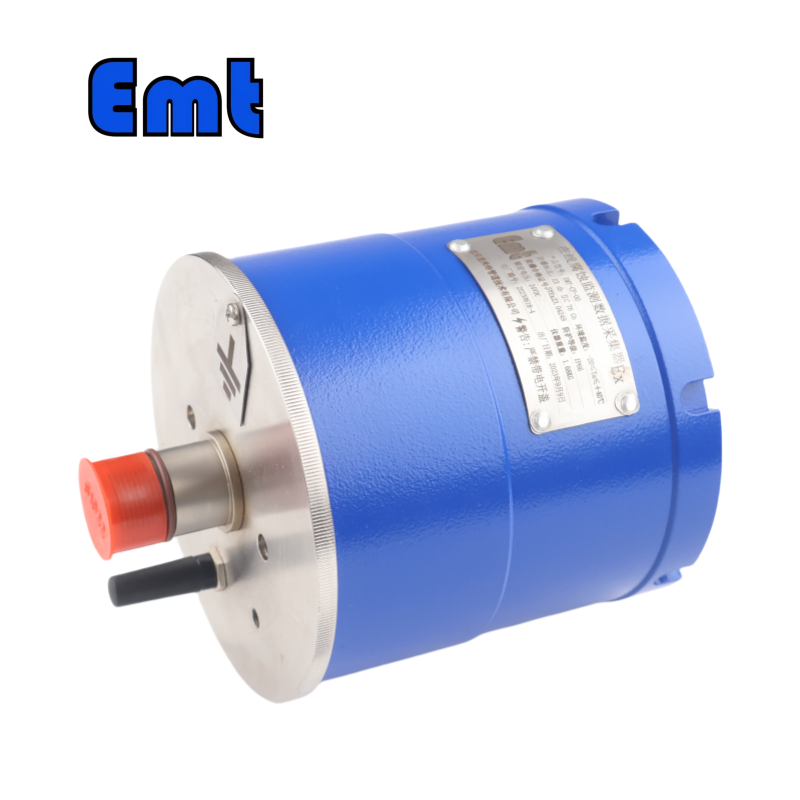
The LPR system measures the corrosion rate and sends it to your host computer through standard protocols. It links directly to the probe or through a cable in a split configuration, and it accepts columnar, flat-head, and standard insertion probes.
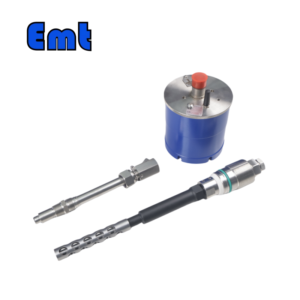
The hydraulic probe pushes in and pulls out under line pressure, so you never stop the process to service it. The coupon probe gives a direct weight-loss check that operators still trust as the baseline.
Key features
- Continuous readings — ER and LPR probes show corrosion rate while the line runs, not just during shutdowns.
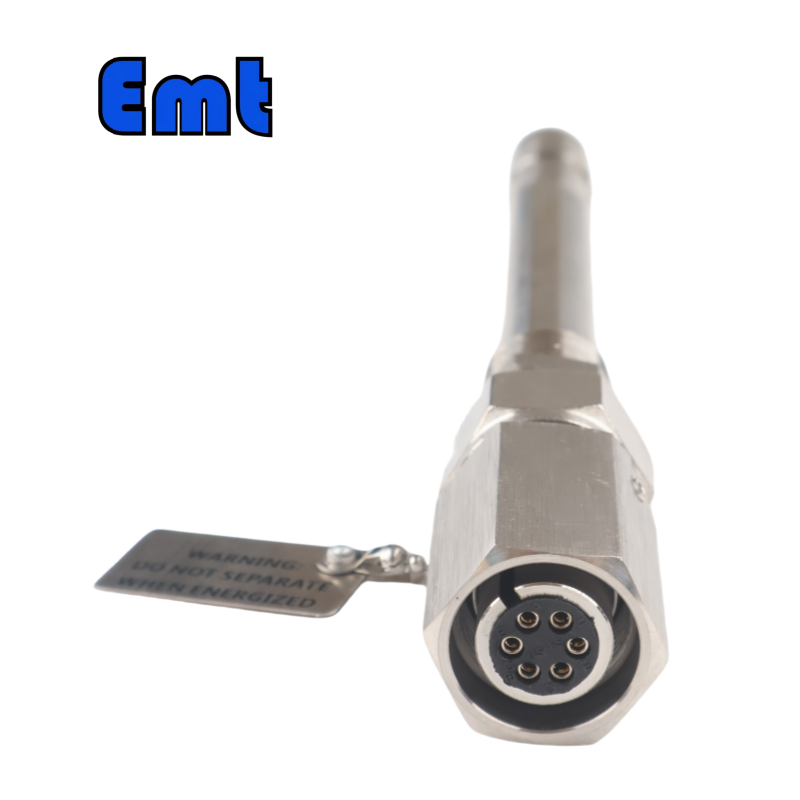
- Retrievable design — EMT-EP100 and the hydraulic probe insert and withdraw under pressure through access fittings.
- High-pressure rating — the ECP series works up to 26 MPa, suited to trunk lines and risers.
- Multiple element shapes — columnar and sheet elements cover flush and protruding installations.
- Split or direct wiring — LPR probes connect straight to the collector or via cable for remote racks.
- Shared fittings — probes, coupons, and retrieval tools use the same access system, which simplifies spares.
Specifications
| Parameter | EMT specification |
|---|---|
| Probe types | Electrical resistance (ER), linear polarization resistance (LPR), hydraulic insertion, corrosion coupon |
| ER element shapes | Columnar (cylindrical), sheet (flat) |
| Maximum pressure (ECP series) | 26 MPa |
| EMT-EP100 design | Fixed-length, retrievable, fully welded sensor |
| LPR output | Real-time corrosion rate to host system via protocols |
| Service | Oil, gas, power, water treatment, process lines |
| Hydraulic probe | Insert and retrieve under line pressure, no shutdown |
Typical applications
- Pipeline corrosion monitoring on trunk and gathering lines
- Corrosion rate control for inhibitor injection programs
- High-pressure access points on risers and plant piping
- Baseline weight-loss checks with corrosion coupons
- Process water and acid systems using LPR probes
FAQ
What is the difference between an ER and an LPR corrosion probe?
An ER probe measures cumulative metal loss from resistance change and works in most fluids. An LPR probe gives an instantaneous rate from a small applied voltage and needs a conductive medium.
Can a corrosion probe be installed without stopping the line?
Yes. The hydraulic insertion probe and retrievable EMT-EP100 go in and come out through high-pressure access fittings while the process runs.
How much pressure can the EMT corrosion probe handle?
The ECP series resistance probe is rated to 26 MPa. Choose the access fitting and probe body to match your line pressure and fluid.
Which corrosion probe suits water treatment?
LPR probes read well in conductive water and acid systems, so they fit cooling water and process water duties.
Reviews
There are no reviews yet.